



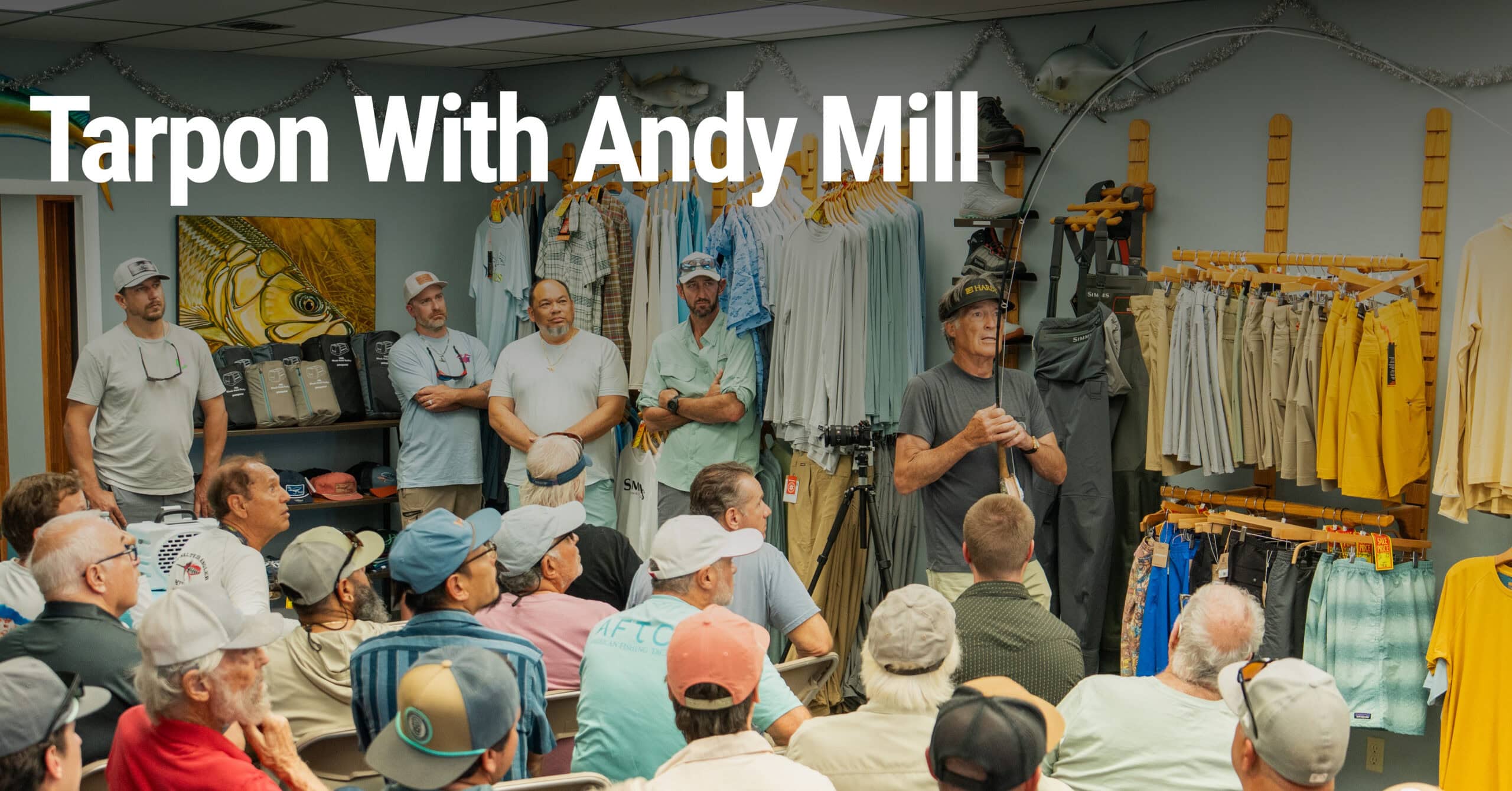
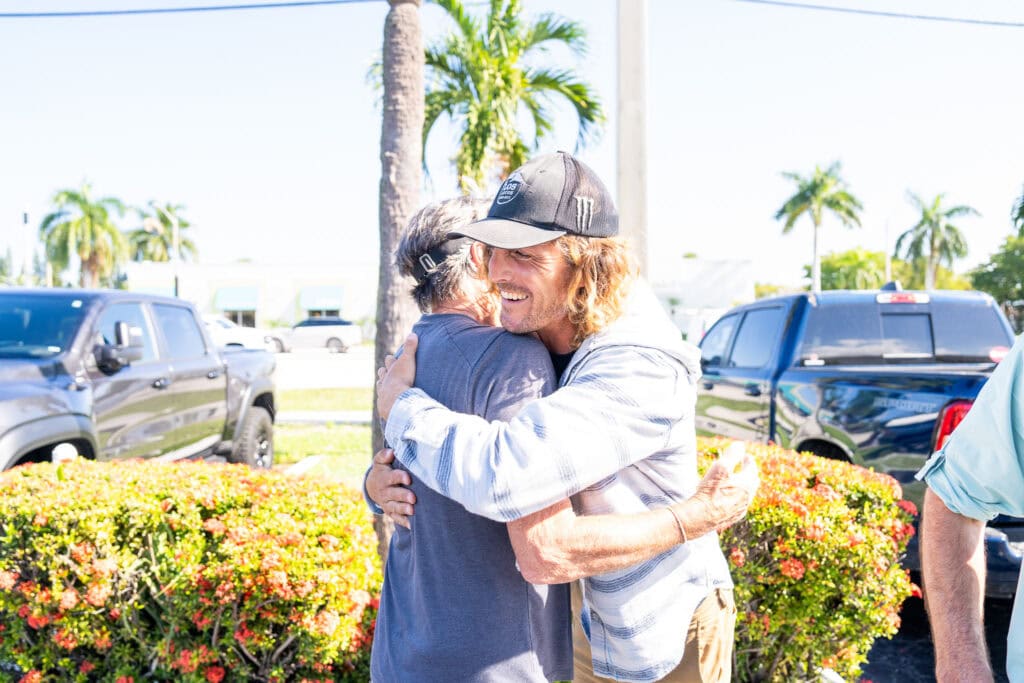
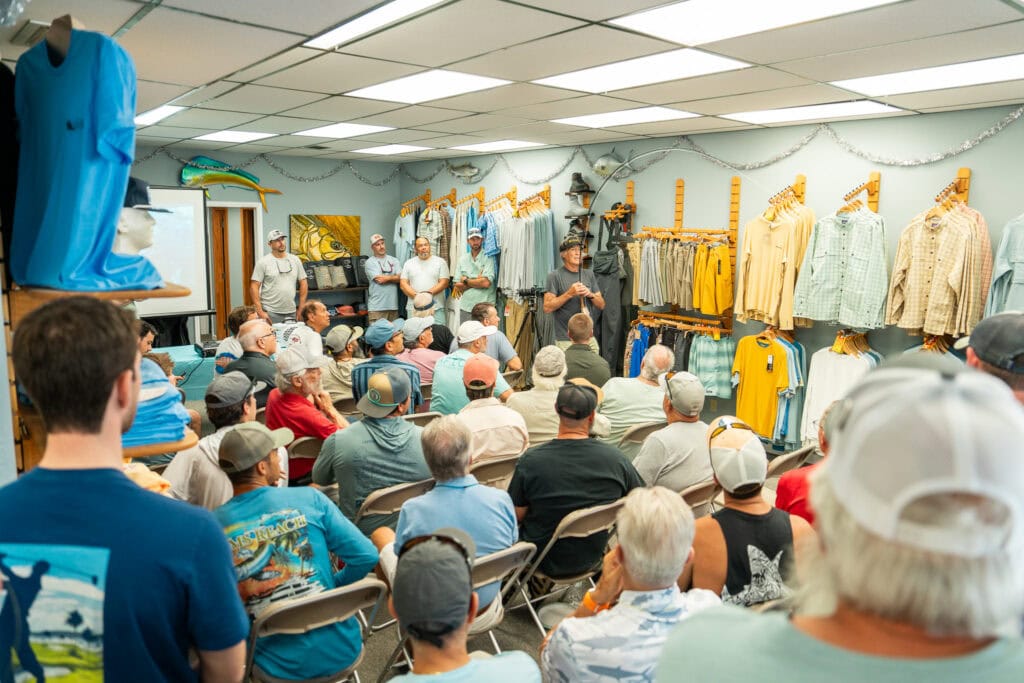
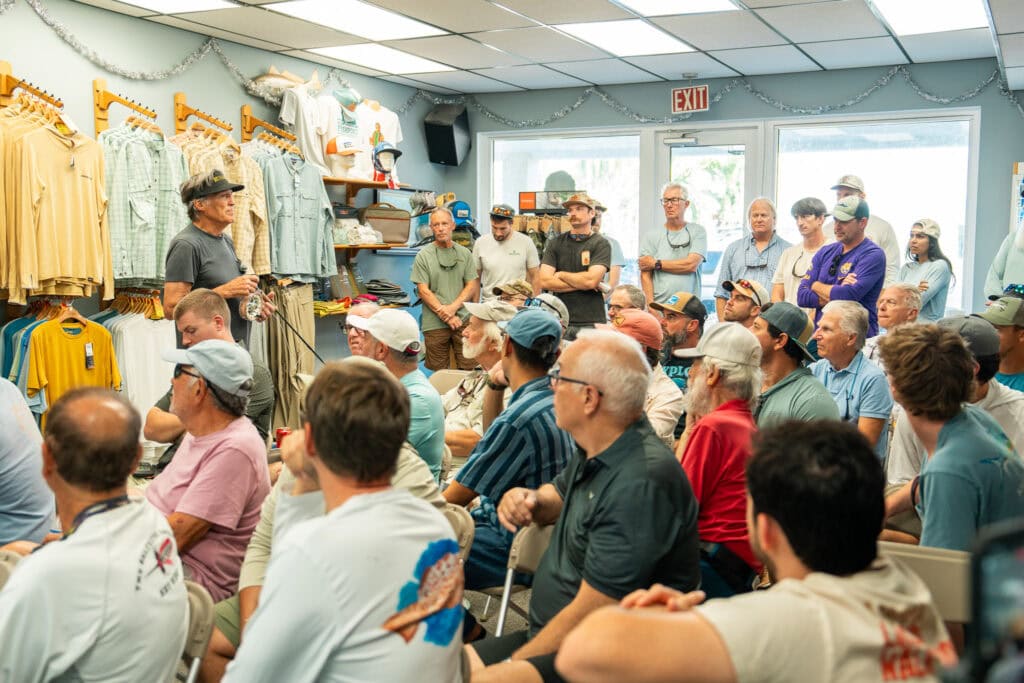
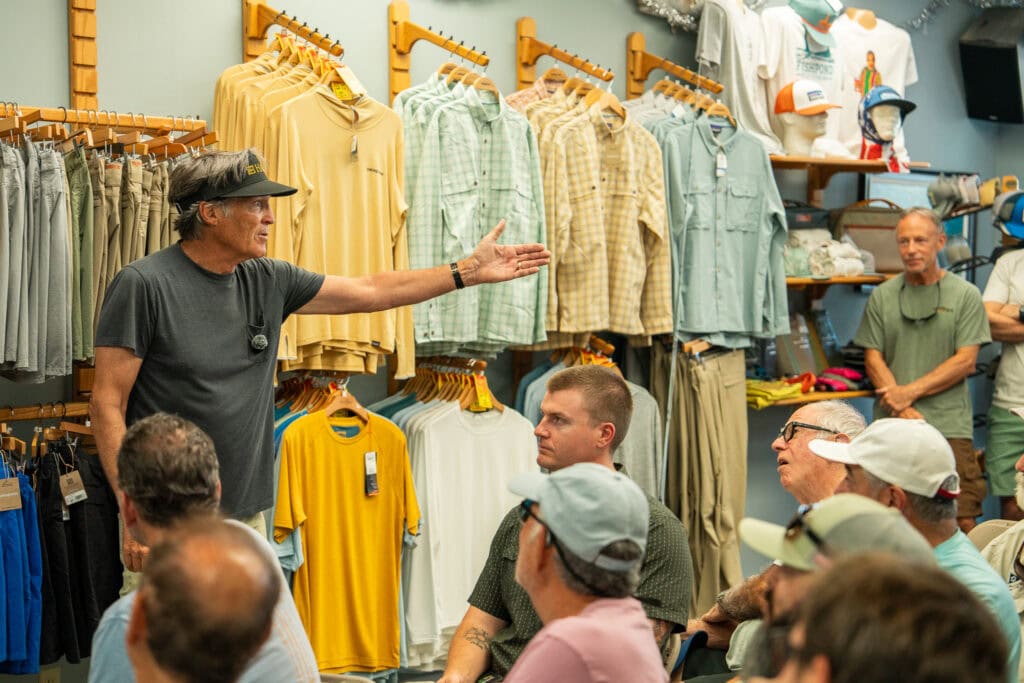
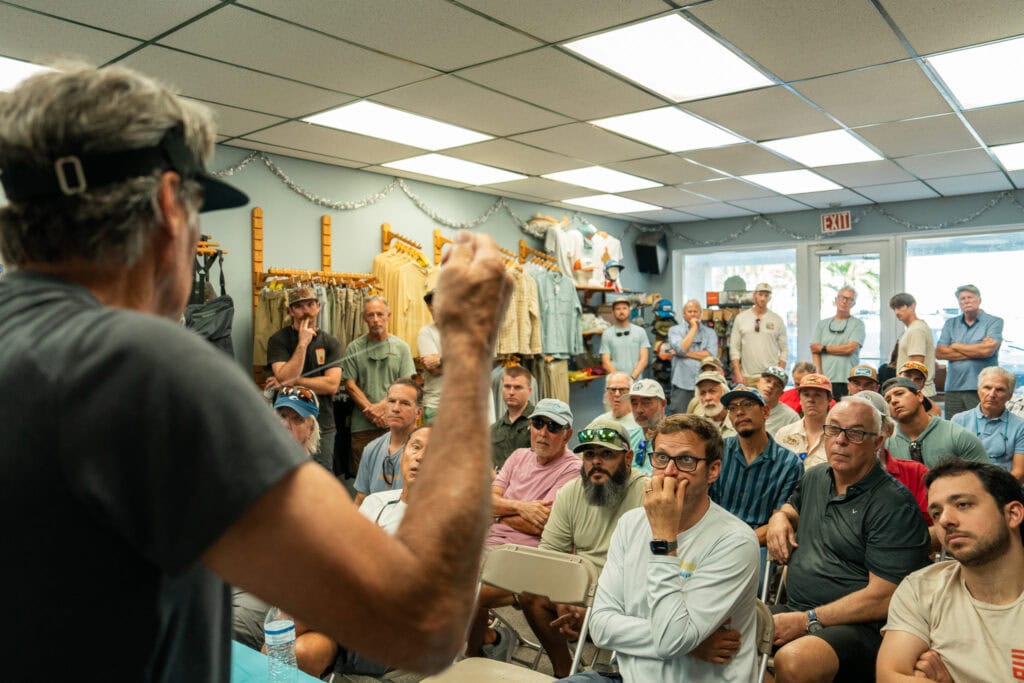
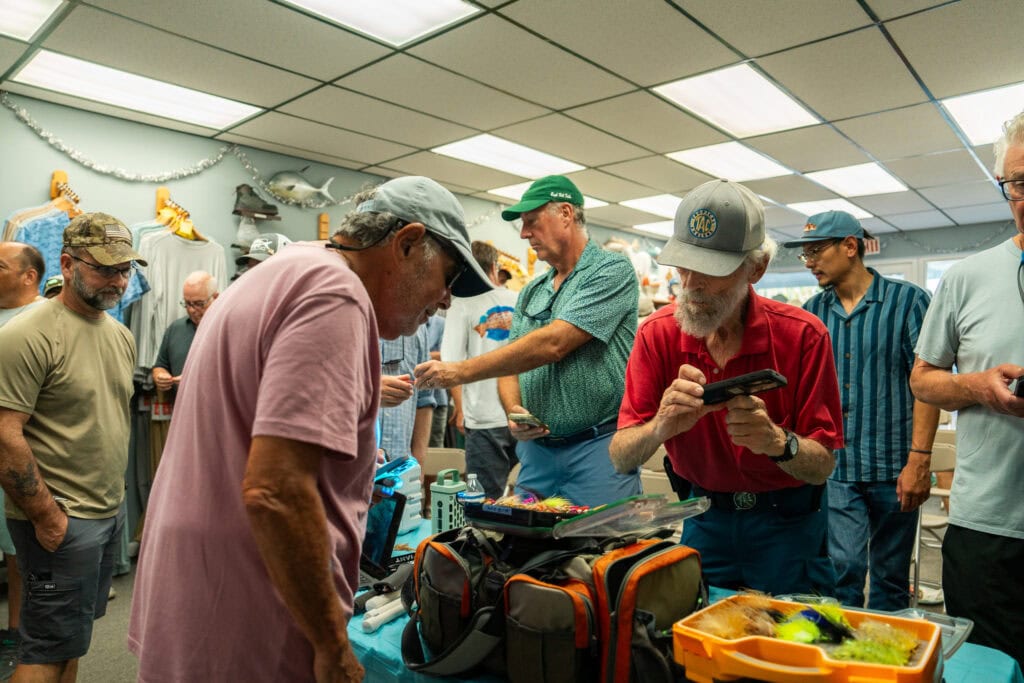
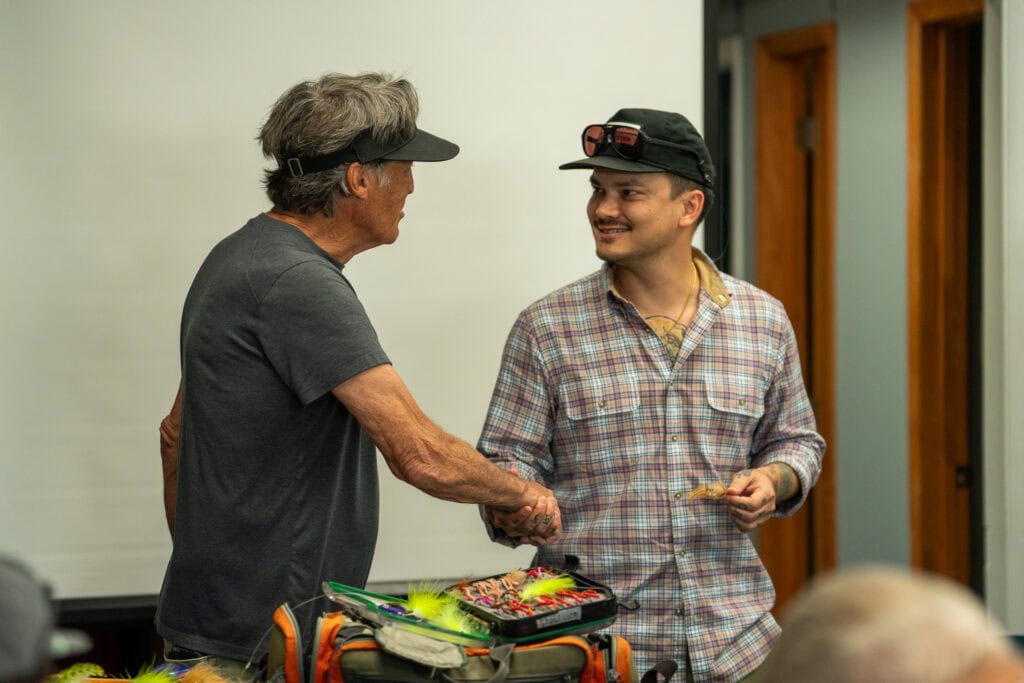
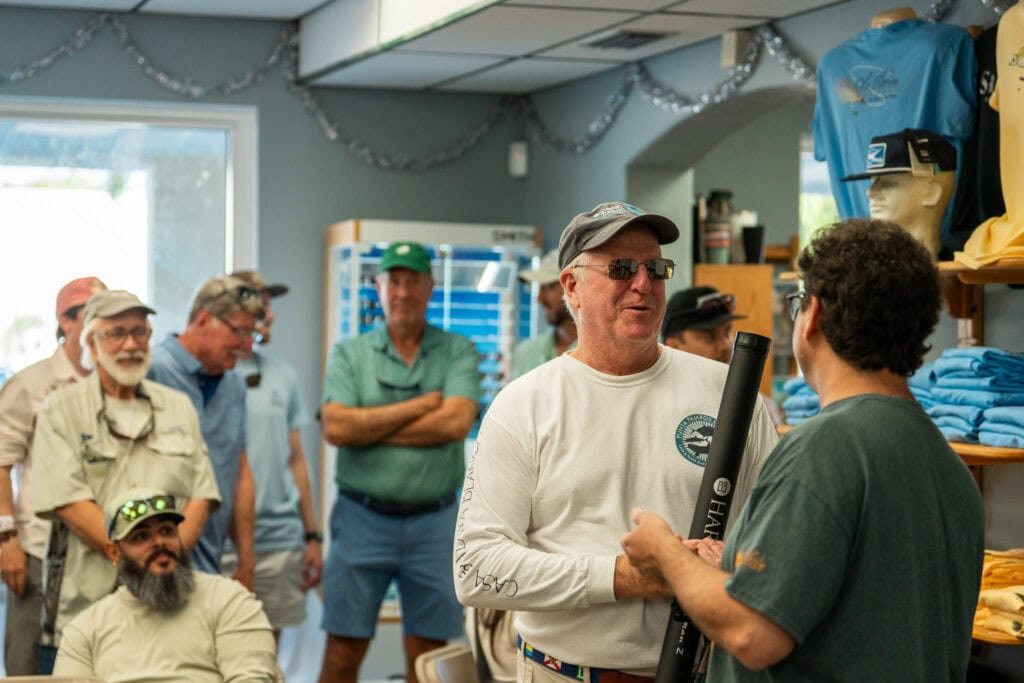
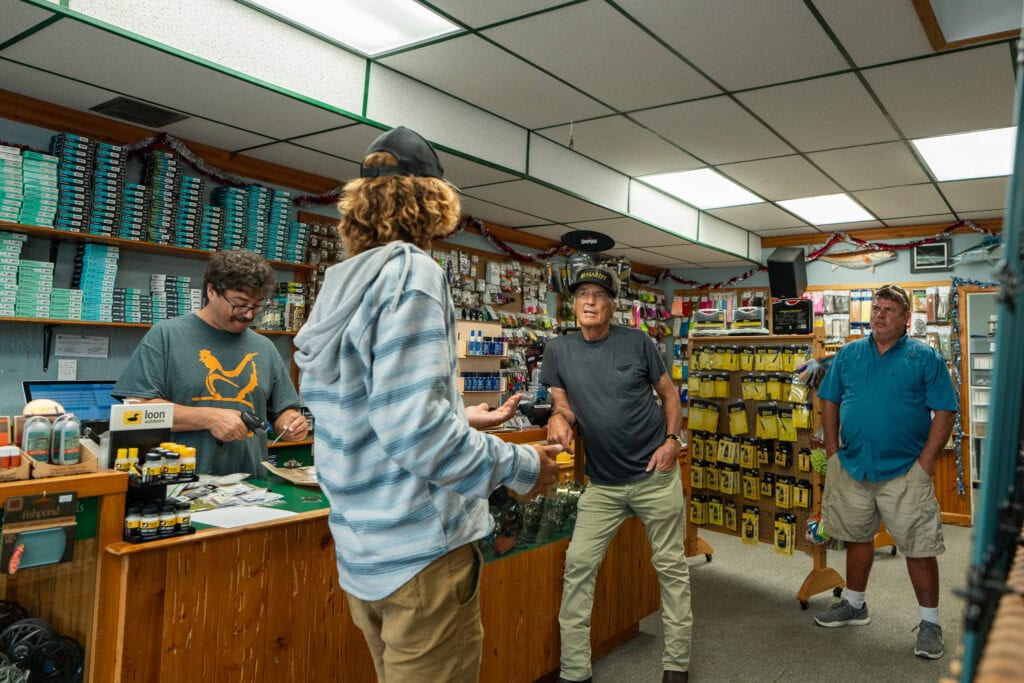
Huge thanks to an awesome evening of tarpon talk with Andy Mill. The shop was packed with anglers who were fired up to learn, ask smart questions, and geek out over the details that actually make a difference when the fish of a lifetime shows up.
Tarpon are a funny mix of simple and impossible: find them, feed them, come tight, and then somehow keep them pinned while they do everything they can to come unglued. This seminar did a great job breaking the whole game into pieces you can actually practice and apply.
Here are the biggest takeaways from the night — from feeding and fight, to tactics, casting, and the little things that separate “almost” from “landed.”
Feeding Tarpon: Start by Reading the Fish
A recurring theme was this: your best shot at success comes before you ever cast. The more you can read tarpon behavior, the less you’re guessing — and the more you’re presenting with purpose.
We talked about common “modes” tarpon show up in:
Rolling fish (often relaxed, but not always easy)
Cruising/moving fish (windows are short — you need to be ready)
Strings and travel lanes (predictable movement if you don’t disrupt them)
Laid-up fish (can be the easiest or the most maddening, depending on pressure)
The key isn’t just seeing tarpon — it’s learning to see what they’re doing and what that means for your approach, your lead, and your retrieve.
Tactics:
One of the most practical parts of the night was the reminder that most “missed shots” start with positioning, not casting.
Good tactics looked like:
Sliding the fly into position
Setting up for a clean angle (so the line tracks straight and the fly lands right)
Minimizing chaos on the deck (because the “perfect cast” doesn’t matter if your line is knotted around your cleat)
Thinking in lanes and windows, not just distance
Where is the fish going? Where can I meet it without rushing the shot?
We also hit on presentation fundamentals that get repeated for a reason:
Lead the fish (but don’t “line” it)
Keep the fly in the zone long enough to be seen
Make the retrieve match the mood: sometimes it’s subtle, sometimes it’s “get outta here!”
The Moment of Truth: Hook Set and Staying Connected
Tarpon eats can feel like slow motion — until they aren’t. A big reminder from the seminar:
Strip-set. Strip-set again. Then keep strip-setting until you’re absolutely sure you’re buried.
The goal is simple: drive the hook with the line hand, keep the rod low, and avoid lifting the rod like you’re trout fishing. Once you’re tight, it’s all about pressure and control — not excitement.
The Fight: Bow, Angles, and the Last 10 Minutes
LEARN HOW TO PULL WITH PRSURE.
Get yourself a pully system like Andy showed,
Tarpon don’t just jump — they try to throw the hook like it’s their job.
Bow on the jump.
Keep heavy steady pressure and control the angle.
Use side pressure instead of high rod angles
Be willing to move the boat or change angles to stay in control.
And the best reminder of all:
Most heartbreak happens at the boat.
When they’re close, anglers tend to rush. The better move is to stay calm, keep pressure consistent, and finish the fight like you started it — clean.
Casting: Real Tarpon Casting Is Quick, Not Pretty
This wasn’t about hero casts. The message was clear:
A repeatable 40–70 foot shot, delivered fast and accurate, beats a perfect 90-foot cast you can’t control.
We focused on:
Reducing false casts (quick pick-up and lay-down wins)
Line control on the deck (or a stripping basket when it makes sense)
Loop control and trajectory (especially in wind)
Accuracy as a skill you can actually train
A great “homework” concept from the evening was practicing:
quick shots (pick up → one false cast → deliver)
accuracy at realistic tarpon distances
“lead distance” reps (because guessing wrong by 3 feet matters)
The Little Things: Gear, Leaders, Flies, and Avoiding Dumb Break-Offs
We also covered quick-hit details that save trips:
leader and tippet choices based on conditions
fly choices
knots, rigging, and bite protection details that keep the good fish from winning on a technicality
None of it was complicated — it was just the stuff you don’t want to learn the hard way.
Thank You Again Andy Mill, and to everyone who came out and made it such a fun day. Seminars like this are always a good reminder: tarpon can be humbling, but they’re also the most addictive puzzle we get to chase with a fly rod.
If you missed it, keep an eye at @Olefloridaflyship for future events — and in the meantime, go practice the stuff that matters: seeing fish, setting up the shot, clean line control, and fighting smart.
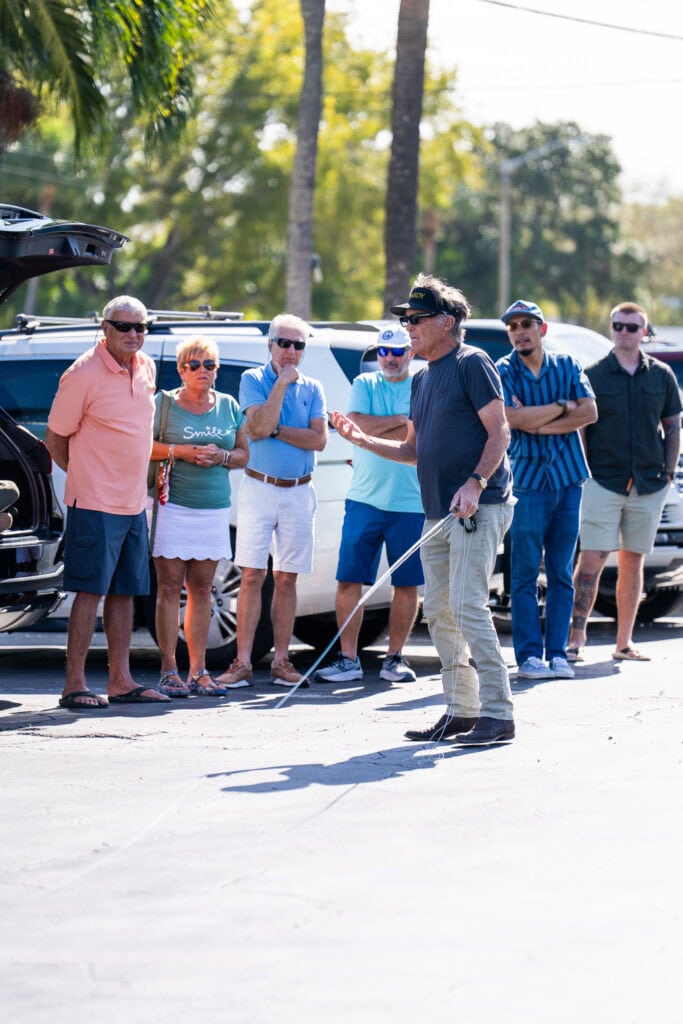
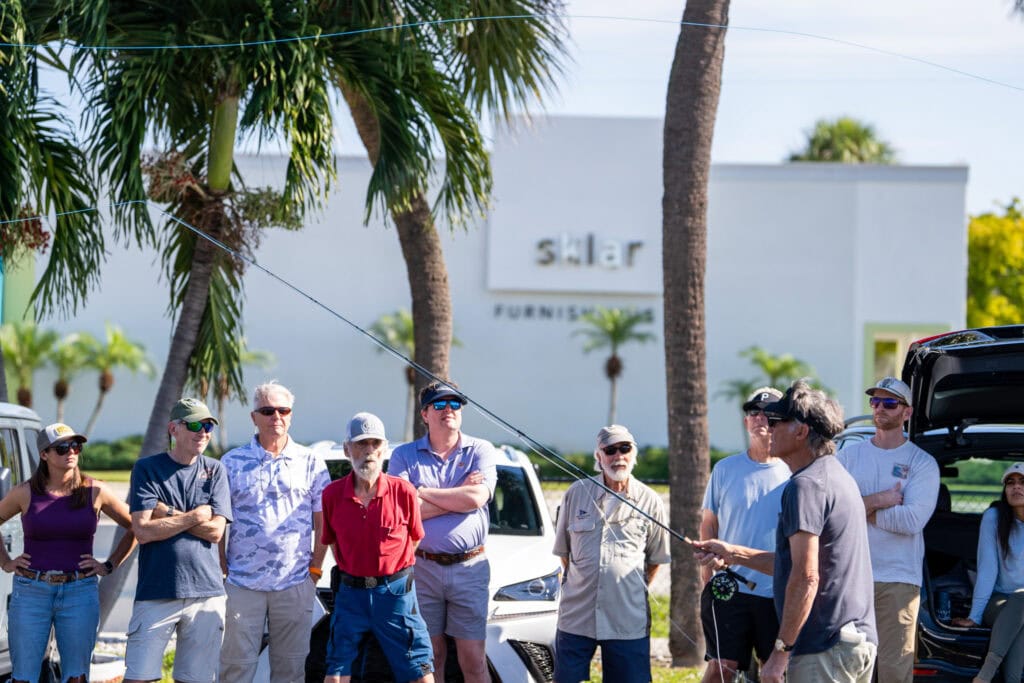
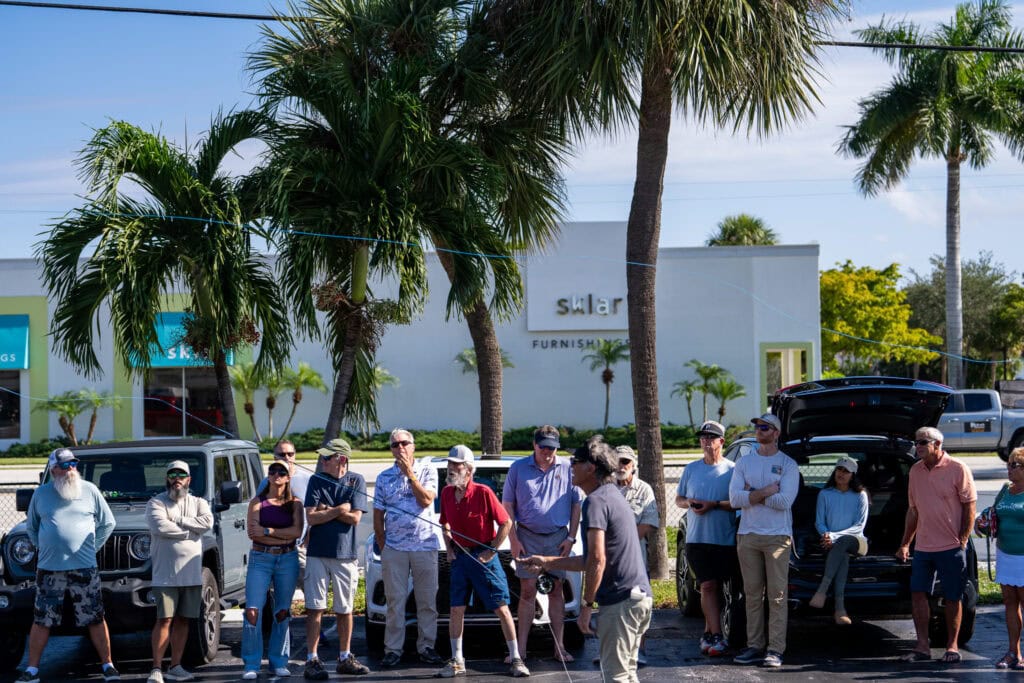
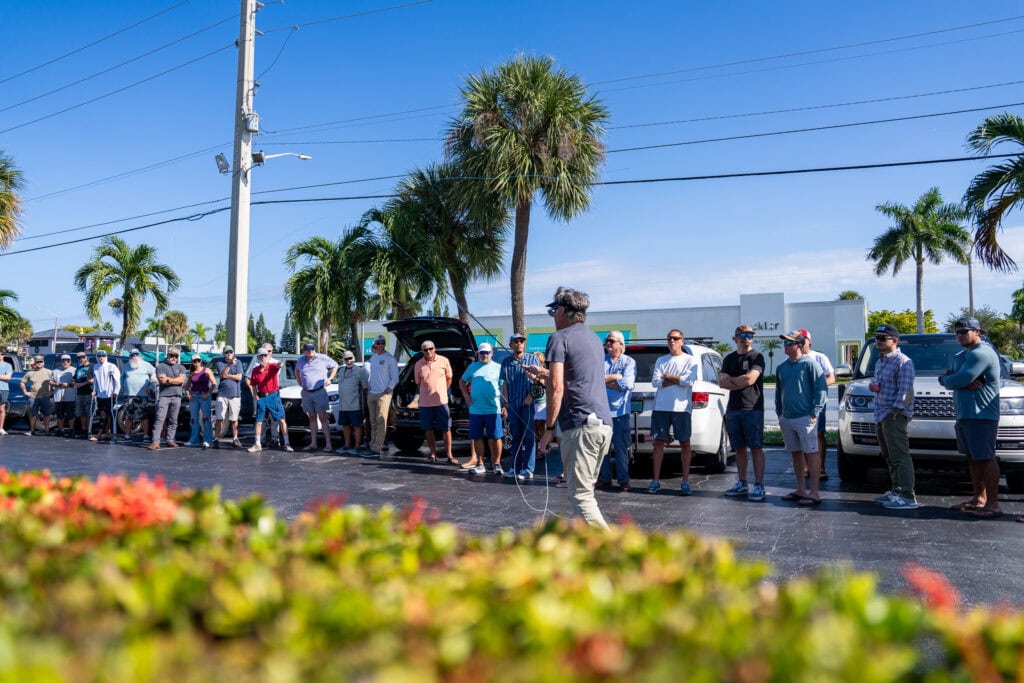
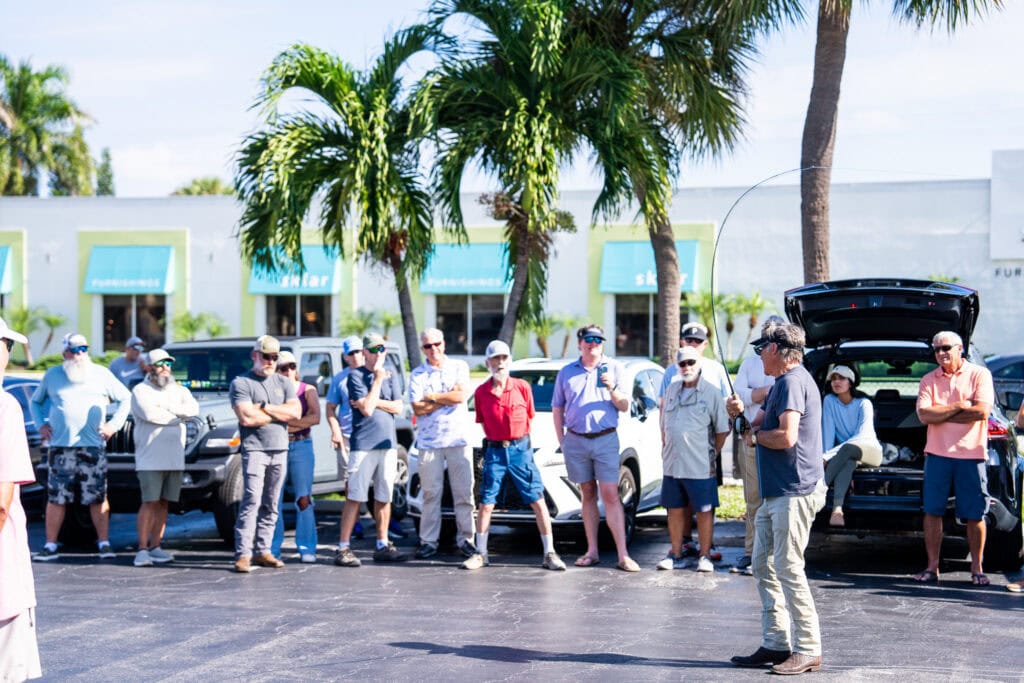
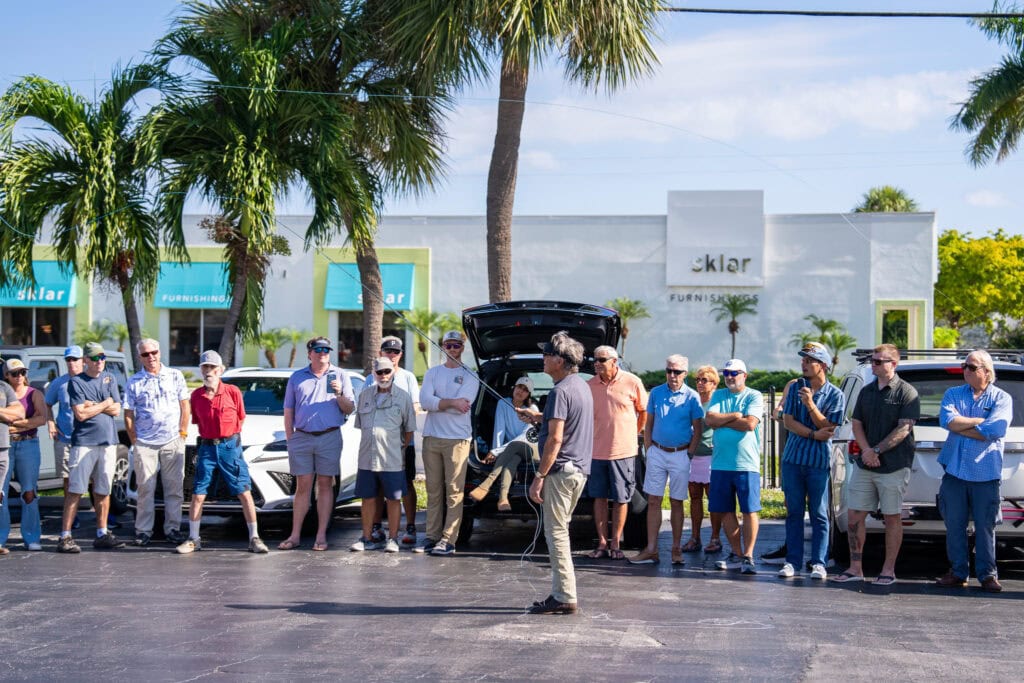
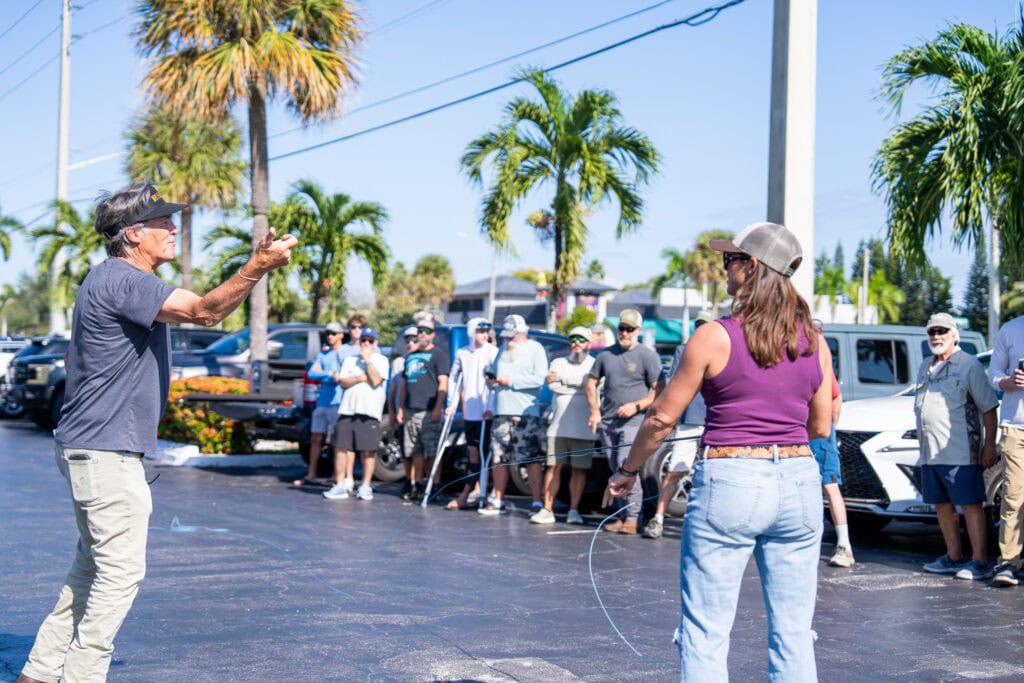


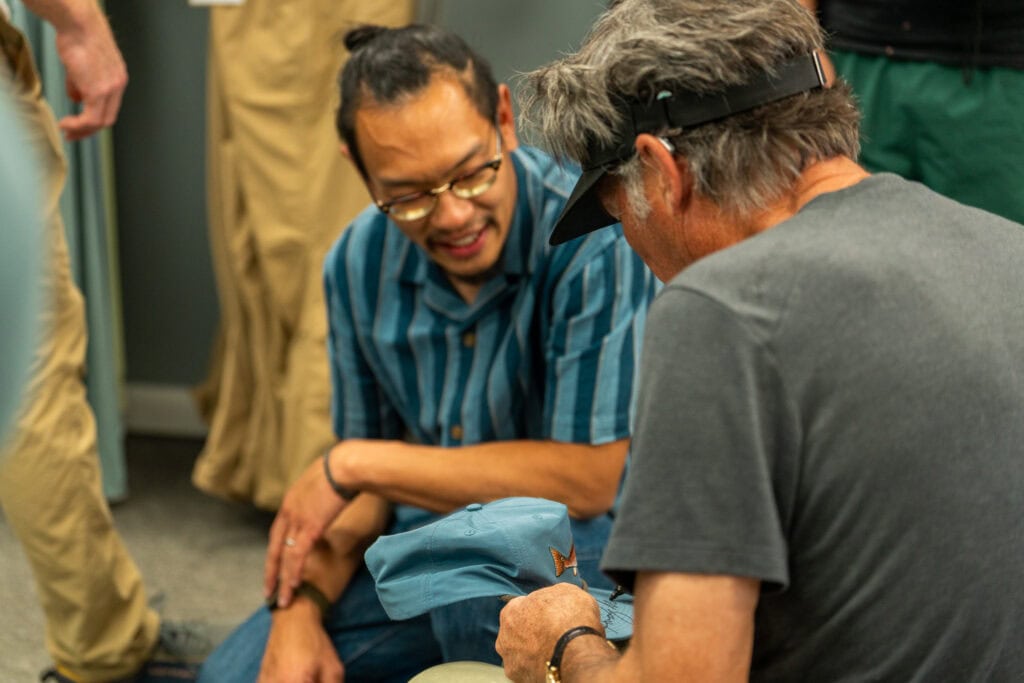

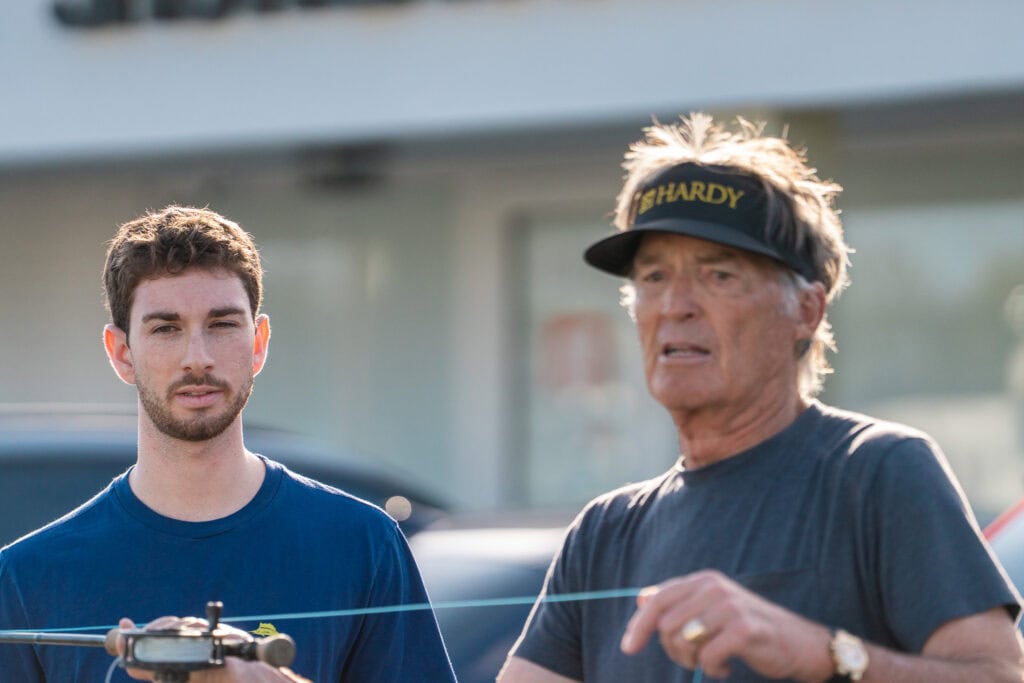
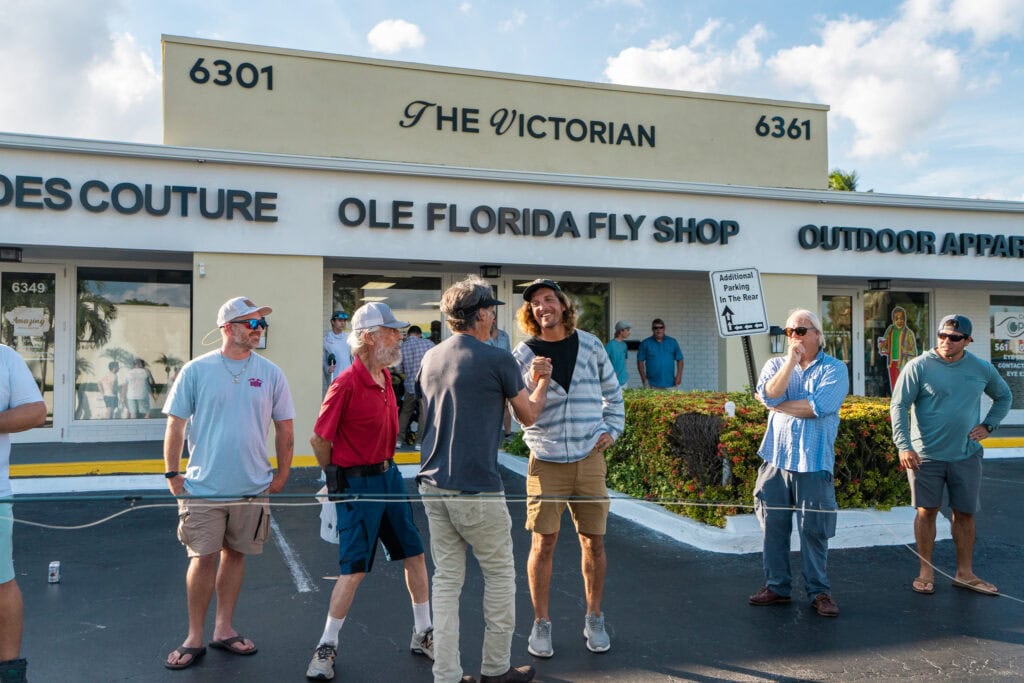

The Andy Mill event was superb. Andy already was teaching early arrivals on the parking lot when I got there. After his illuminating talk indoors he was back out there again, and still at it when I had to head back to Miami. He was patient and generous with his time for everyone there.. He corrected my mistakes,, improved my cast and was still with me by proxy next morning when I went to the neighborhood park to practice what I’d learned. It was worth all 90 miles of driving. Thanks to Darren for hosting.